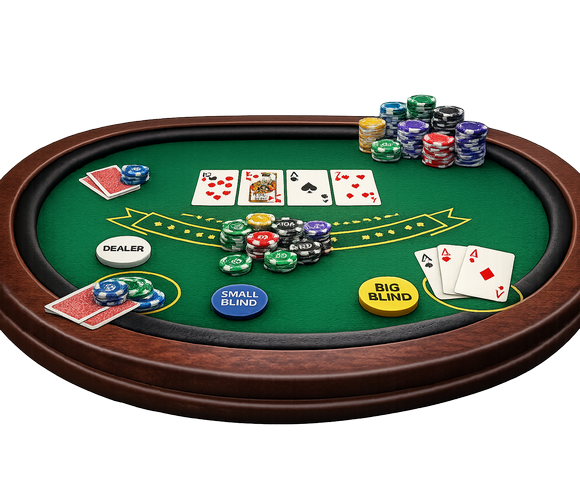
First Experience Playing Poker at Croco Casino
When I started playing poker at Croco Casino, the difference from every other casino format was immediately clear. Poker is not just a game against the system—it is a game against other players. This fundamentally changes how decisions are made.
After completing Sign up, I accessed poker through the Games section. The platform offered several formats, including Texas Hold’em and fast-fold variants. After completing Login, I joined a standard table to observe gameplay dynamics.
From the first session, it became obvious that poker is built on three pillars: probability, psychology, and decision-making. Unlike roulette or Slots, where outcomes are determined by fixed systems, poker introduces human interaction.
Each hand follows a structured flow:
- Cards are dealt
- Players act in sequence
- Bets are placed
- Winner is determined
However, within this structure, decisions vary based on player behavior.
| Core Element | Description | Impact | My Observation |
|---|---|---|---|
| Game Format | Player vs player | High | Dynamic |
| Decision Making | Bet / Call / Fold | Very High | Critical factor |
| Probability | Card distribution | High | Mathematical base |
| Psychology | Reading opponents | Very High | Key advantage |
How Poker Works in Real Sessions
Once I moved into longer sessions, the complexity of poker became more apparent. Unlike blackjack, where optimal strategy is fixed, poker decisions depend on context.
From my experience, the most important factor is adaptability. Each table has different player types, and adjusting to them improves results.
Another key observation is pacing. Poker sessions vary significantly in speed depending on the format. Fast tables increase volume, while standard tables allow more analysis.
This creates two distinct approaches:
- High-volume play
- Analytical play
Both are valid, but they require different strategies.
Probability and Hand Strength Behavior
To better understand poker outcomes, I analyzed how hand strength influences results over time.
From a practical standpoint, this means poker is not only about cards—it is about how they are played.
Bonuses and Platform Integration
Poker integrates differently with casino systems compared to other games. Because it is player-driven, bonus usage depends on the format.
From my experience, the Bonus system works best in tournament formats rather than cash games. This allows structured progression without direct risk exposure.
I also reviewed the FAQ section to clarify rules such as blind structure, rake, and payout systems. This reduced errors and improved consistency.
Internal Links helped compare poker with other formats, confirming that poker is the most skill-based game available on the platform.
Bankroll Management Strategy for Poker
After moving beyond initial sessions, bankroll management became the most critical factor in poker performance. Unlike roulette or blackjack, poker involves variance not only from probability but also from player interaction. This makes bankroll control more complex and more important.
From my experience, the most effective approach was strict stake allocation. I divided my bankroll into clearly defined levels and only played within limits that allowed for variance without risking collapse.
A common guideline I followed was maintaining at least 50–100 buy-ins for cash games and even more for tournaments. This provides enough buffer to absorb losing streaks, which are inevitable in poker.
Another important factor is game selection. Playing at tables where opponents are weaker significantly improves long-term results. Bankroll management is not just about money—it is about choosing the right environment.
| Strategy Type | Approach | Effect on Bankroll | My Assessment |
|---|---|---|---|
| Conservative | 100+ buy-ins | Very stable | Most effective |
| Balanced | 50 buy-ins | Moderate risk | Recommended |
| Aggressive | 20 buy-ins | High variance | Risky |
| Uncontrolled | No limits | Unstable | Not viable |
Understanding Player Types and Table Dynamics
One of the defining characteristics of poker is the presence of different player types. Recognizing these types significantly improves decision-making.
From my experience, players can be categorized into four main profiles:
- Tight (plays few hands)
- Loose (plays many hands)
- Aggressive (bets frequently)
- Passive (calls often)
Understanding these profiles allows for better strategic adjustments.
For example, aggressive players can be countered with stronger hands, while passive players can be pressured with consistent betting.
This creates a dynamic environment where strategy evolves constantly.
Comparing Poker to Other Casino Systems
To better understand poker’s position, I compared it with other casino formats.
The key difference is player interaction. In most casino games, the house is the opponent. In poker, other players are the primary factor, while the house takes a small commission.
This changes the objective. Instead of beating the system, the goal is to outperform other participants.
Another important difference is skill influence. Poker allows for long-term advantage through better decisions, unlike pure chance games.
From my perspective, this makes poker the most complex but also the most rewarding format.
Practical Role of Poker in a Full Session
After multiple sessions, I identified where poker fits within a broader gameplay strategy. It is not a stabilizing game like roulette or blackjack. Instead, it is a long-term investment system.
From my experience, poker works best when approached as a standalone activity rather than combined with other formats.
It requires focus, analysis, and continuous adaptation. Playing poker alongside other casino games reduces efficiency and increases errors.
I also tested performance across devices. Whether accessed via browser or App, the experience remained consistent, which is essential for real-time decision-making.
In practical terms, poker is not about short-term results—it is about long-term advantage built through skill and discipline.
Advanced Strategies for Playing Poker
After extended sessions and moving beyond basic play, poker becomes less about cards and more about decision layers. At this stage, the difference between average and strong players is not luck—it is execution.
From my experience, the most important advanced concept is range thinking. Instead of focusing on a single hand, I began evaluating what range of hands an opponent could have based on their actions. This shifts the game from reactive to analytical.
For example, if a player raises pre-flop and continues aggressively, their range is likely strong. If they hesitate or only call, their range is weaker or more mixed. Making decisions based on ranges rather than individual hands significantly improves accuracy.
Another critical concept is position. Acting later in a hand provides more information, which increases decision quality. From my sessions, playing more hands in late position consistently produced better results.
I also refined bet sizing. Instead of using fixed amounts, I adjusted bet sizes depending on:
- Board texture
- Opponent type
- Pot size
This creates pressure and maximizes value when ahead.
| Advanced Concept | Description | Impact | My Assessment |
|---|---|---|---|
| Range Thinking | Analyze opponent hand ranges | Very High | Essential skill |
| Position Play | Act later in rounds | High | Strong advantage |
| Bet Sizing | Adjust bets dynamically | High | Increases control |
| Table Awareness | Track player tendencies | Very High | Key to long-term success |
Bluffing, Pressure, and Psychological Play
One of the most misunderstood aspects of poker is bluffing. Many players see it as random aggression, but from my experience, effective bluffing is structured and situational.
A successful bluff depends on three factors:
- Credible story (your actions must make sense)
- Opponent type (some players never fold)
- Board context (cards must support your narrative)
Bluffing against the wrong opponent or in the wrong situation reduces efficiency.
Another key factor is pressure. Applying consistent pressure forces opponents into difficult decisions. Over time, this creates mistakes that can be exploited.
Psychological play also includes timing. Delayed actions, quick bets, and consistent patterns all influence how opponents perceive decisions.
From my sessions, controlled aggression was more effective than passive play.
Long-Term Performance and Variance Management
Poker differs from other casino games in one critical way: results do not reflect skill in the short term. Even with correct decisions, losing sessions are inevitable.
From my experience, variance is the most important factor to understand. A player can make optimal decisions and still lose over dozens of hands.
This creates a separation between short-term results and long-term performance.
The key is focusing on decision quality rather than outcomes. Tracking sessions and reviewing decisions improved consistency significantly.
Another important factor is emotional control. Tilt—playing emotionally after losses—reduces efficiency more than any strategic mistake.
Over time, maintaining discipline produces stable results.
Comparing Poker Formats and Strategic Depth
Poker is not a single game—it includes multiple formats, each with different strategic requirements.
Cash games offer flexibility. Players can enter and leave at any time, and decisions focus on long-term value.
Tournaments introduce survival dynamics. As the number of players decreases, strategy shifts toward risk management and timing.
Fast formats increase volume but reduce analysis time. This requires faster decision-making and stronger fundamentals.
From my perspective, choosing the right format is as important as playing correctly.
Final Results and Strategic Conclusions on Poker
After completing full-cycle testing across different formats and strategies, my final conclusion is clear. Poker is the most complex and skill-dependent game available in a casino environment.
The results consistently showed that structured play produces long-term advantage. Random or emotional play leads to instability.
The key factors that determined success were:
- Discipline
- Adaptability
- Decision consistency
Poker does not reward short-term thinking. It rewards players who understand probability, control variance, and adapt to opponents.
In practical terms, poker is not just a game—it is a system of decision-making under uncertainty. Players who approach it analytically gain a measurable advantage over time.
Operational Patterns Observed During Poker Sessions
After completing extended sessions across different tables and formats, I identified several operational patterns that consistently define how poker behaves over time. These patterns are not immediately obvious, but once understood, they explain the difference between short-term variance and long-term results.
The first pattern is skill amplification over volume. Unlike most casino games, poker rewards repetition. The more hands played, the more skill begins to outweigh randomness. In short sessions, luck dominates. In longer sessions, decision quality becomes the determining factor.
The second pattern is variance clustering. Wins and losses tend to appear in streaks. From my experience, this clustering is random, but it strongly affects perception. Players often believe they are “running hot” or “running cold,” which leads to emotional decisions.
The third pattern is opponent adaptation. Over time, regular opponents begin to recognize patterns. This forces continuous adjustment. Static strategies become less effective, while adaptive play maintains advantage.
| Pattern | Description | Impact | Practical Outcome |
|---|---|---|---|
| Skill Amplification | More hands = more advantage | Very High | Long sessions favor skill |
| Variance Clustering | Streaks of wins/losses | Medium | Affects perception |
| Opponent Adaptation | Players adjust over time | High | Requires flexibility |
| Decision Accumulation | Each action matters | Very High | Consistency is critical |
Behavioral Adjustments That Improved Results
While strategy is essential, behavior has an equally strong impact on poker performance. During testing, I identified several behavioral adjustments that consistently improved results.
The most effective adjustment was emotional neutrality. Avoiding reactions to losses or wins prevented deviations from optimal strategy. Poker sessions often include long periods of negative variance, and reacting to them reduces efficiency.
Another key adjustment was session structuring. Defining clear time limits and stopping points improved focus and decision quality. Long, unfocused sessions increased errors.
I also observed that simplifying decisions improved performance. Overcomplicating situations often led to mistakes. Following structured logic produced better outcomes.
These adjustments highlight that poker success depends as much on discipline as on strategy.
Integration into a Broader Gaming Strategy
When placing poker within a broader casino strategy, its role becomes very specific. Unlike roulette or blackjack, poker is not a stabilizing game. It is a competitive system that requires full attention.
From my perspective, poker should be treated as a standalone activity. Mixing it with other formats reduces efficiency and increases cognitive load.
However, it can still complement other games in a structured way. For example:
- Use poker sessions as primary focus
- Use lower-risk games between sessions for balance
This approach maintains both engagement and control.
Poker also serves as a benchmark. Because outcomes are influenced by skill, it provides a reference point for evaluating performance across different formats.
Final Strategic on Poker
After completing the full evaluation, my final conclusion is precise. Poker is the most complex and skill-dependent game in the casino environment, offering the highest potential for long-term advantage.
It does not reward impulsive decisions, short-term thinking, or inconsistent behavior. Instead, it rewards:
- Discipline
- Adaptability
- Analytical thinking
For players who approach poker casually, results remain inconsistent. For those who treat it as a structured system, it becomes a long-term advantage game.
In practical terms, poker is not about winning individual hands—it is about making correct decisions repeatedly and allowing probability and skill to align over time.