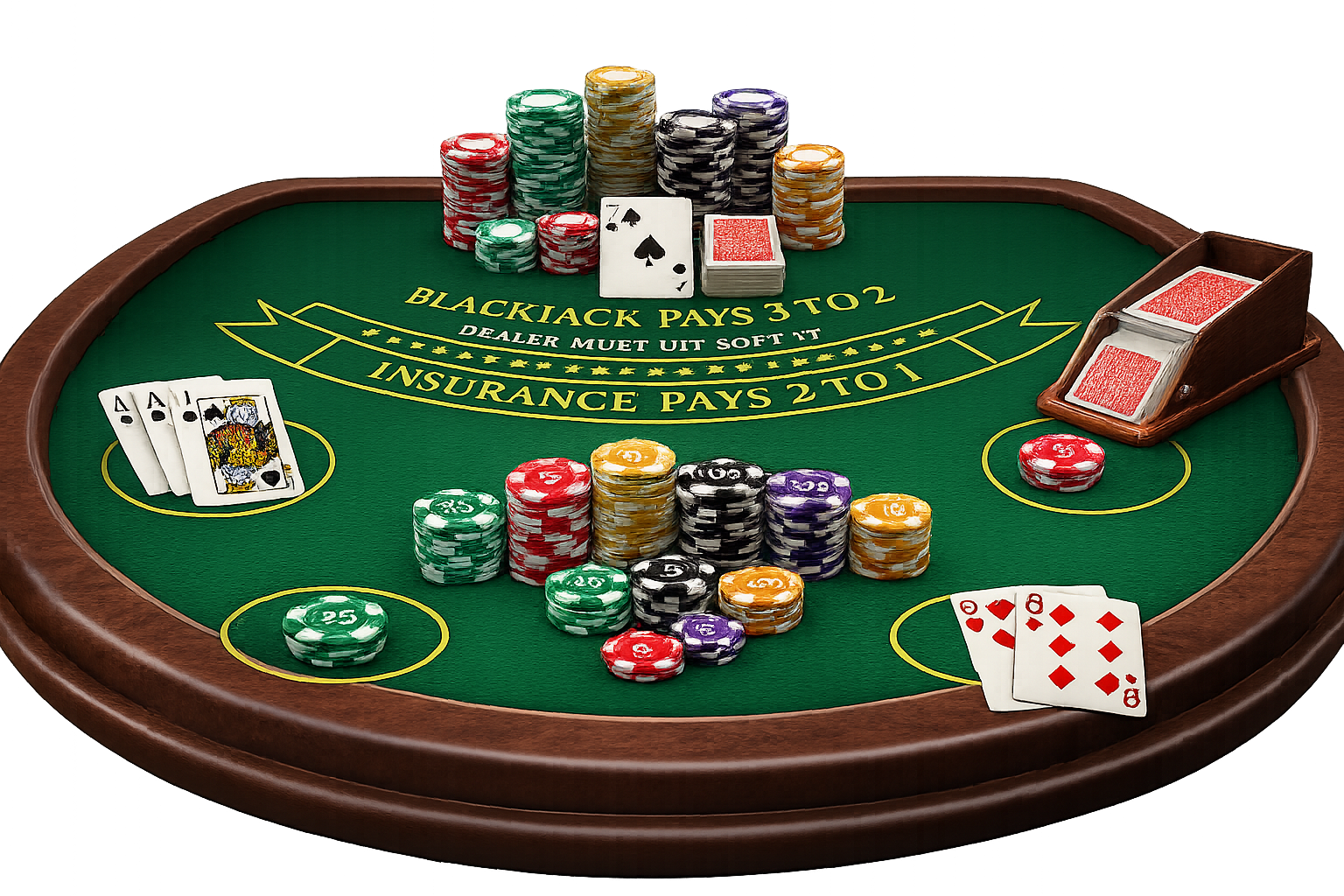
First Experience Playing Blackjack at Croco Casino
When I started playing blackjack at Croco Casino, the shift from slots and wheel-based games was immediately noticeable. Unlike those formats, blackjack introduces decision-making into the equation. Every move—hit, stand, double, or split—affects the outcome.
After completing Sign up, I navigated through the Games section and selected blackjack. The platform offered multiple versions, including classic and live dealer tables. After entering Login, I joined a standard table to observe the flow.
From the first session, it became clear that blackjack is not about passive participation. It is a decision-driven system where the player interacts directly with the game.
The structure is simple: receive cards → make decisions → compare with the dealer. However, the simplicity hides a deeper layer of strategy.
| Feature | Description | Impact on Gameplay | My Impression |
|---|---|---|---|
| Card System | 52-card deck | Defines probability | Transparent |
| Player Decisions | Hit, stand, split | Direct control | Strategic |
| Dealer Rules | Fixed behavior | Predictable | Structured |
| House Edge | ~0.5% (optimal play) | Low compared to slots | Favorable |
How Blackjack Works in Real Sessions
Once I moved into longer sessions, I focused on how blackjack behaves over time. The most important factor is decision consistency. Unlike roulette, where outcomes are fixed, blackjack allows the player to influence results through optimal choices.
From my experience, the key is understanding expected value. Each decision has a mathematically optimal choice, often referred to as basic strategy.
Another important observation is pacing. Blackjack rounds are relatively quick, especially in online versions. This allows for more hands per session compared to live game shows.
This creates a dynamic environment where decisions accumulate over time.
Probability Structure and Outcome Behavior
To better understand blackjack outcomes, I analyzed the probability distribution of common results.
From a practical standpoint, this means that player skill directly impacts results.
Bonuses and Platform Integration
Blackjack integrates differently with casino systems compared to slots. Because it involves skill, wagering contribution may vary depending on platform rules.
From my experience, the Bonus system is usable but less efficient than in slots due to lower contribution rates.
I also used the FAQ section to clarify rules such as dealer behavior and payout ratios. This improved understanding and reduced mistakes during sessions.
Internal Links allowed me to compare blackjack with other table games, reinforcing its position as a strategic alternative to Slots.
Bankroll Management Strategy for Blackjack
After spending more time playing blackjack, I refined my bankroll management approach to reflect its decision-driven nature. Unlike roulette or slots, where outcomes are fixed by probability alone, blackjack allows the player to influence results. This makes bankroll control both more effective and more demanding.
From my experience, the most reliable method was proportional betting. I allocated a fixed percentage of my bankroll to each hand, typically between 1% and 3%. This approach reduces volatility and allows for longer sessions without significant risk exposure.
Another important factor is consistency. Changing bet size based on short-term results—such as increasing after losses—does not improve long-term outcomes. Since blackjack is influenced by probability and decision-making, stability in betting produces better control.
I also found that defining session boundaries is critical. Setting a win target and a loss limit prevents emotional decision-making and preserves balance.
| Strategy Type | Approach | Effect on Balance | My Assessment |
|---|---|---|---|
| Flat Betting | Same stake per hand | Stable progression | Most effective |
| Proportional Betting | Small % of bankroll | Controlled risk | Highly recommended |
| Progressive Betting | Increase after loss | Higher variance | Risky |
| Aggressive Betting | Large stakes | Unstable results | Not effective |
Understanding Basic Strategy and Decision Flow
The defining feature of blackjack is decision-making. Every action—hit, stand, split, or double—has an optimal choice based on mathematical probability.
From my experience, learning basic strategy significantly improves outcomes. It provides a structured framework for decision-making, removing guesswork.
For example, hitting on low totals, standing on strong hands, and splitting pairs under specific conditions all follow predictable logic.
This creates a decision flow rather than a random sequence.
From a practical standpoint, blackjack is not about intuition—it is about following optimal choices consistently.
Comparing Blackjack to Other Casino Systems
To better understand its position, I compared blackjack with other casino formats.
The key difference lies in player control. In roulette, outcomes are fixed. In blackjack, decisions influence results. This creates a more interactive experience.
Another important difference is volatility. Blackjack tends to produce more balanced sessions compared to high-volatility slots.
From my perspective, this makes it more suitable for controlled gameplay.
Practical Role of Blackjack in a Full Session
After multiple sessions, I identified where blackjack fits within a broader gameplay strategy. It acts as a control-based system that allows players to stabilize results while still maintaining engagement.
From my experience, blackjack works well either at the beginning or middle of a session. It allows players to establish balance before transitioning into higher-risk formats.
I also tested performance across devices. Whether accessed via browser or App, the gameplay remained smooth and responsive, which is essential for real-time decision-making.
In practical terms, blackjack is a strategic tool. It is best used for controlled sessions where decision-making plays a central role.
Advanced Strategies for Playing Blackjack
After extended sessions and consistent application of basic strategy, I moved into more advanced approaches that refine decision-making and improve long-term efficiency. While basic strategy already minimizes the house edge, additional layers of control can further stabilize results.
The most effective strategy I identified was decision discipline. This means following optimal moves regardless of short-term outcomes. Many players deviate from strategy after a series of losses or wins, but from my experience, consistency is critical. Each hand is independent, and deviation introduces unnecessary risk.
Another important concept is deck awareness. While online blackjack often uses multiple decks or continuous shuffling, understanding how card distribution affects probability still improves decision clarity. High-card-rich decks favor the player, while low-card-rich decks favor the dealer.
I also tested bet variation strategies. Increasing bets in favorable conditions can improve returns, but only when applied carefully. Without discipline, this approach quickly increases volatility.
| Strategy | Approach | Main Advantage | Efficiency |
|---|---|---|---|
| Decision Discipline | Always follow optimal moves | Reduced house edge | Very High |
| Deck Awareness | Observe card distribution | Improved timing | High |
| Controlled Bet Variation | Adjust in favorable states | Higher returns | Moderate |
| Emotional Play | React to outcomes | Unstable results | Low |
Which Players Benefit Most from Blackjack
Blackjack appeals to a wide range of players, but its structure favors specific profiles.
Analytical players benefit the most. The game provides clear mathematical guidelines, making it ideal for structured thinking and disciplined execution.
Intermediate players also benefit because blackjack allows skill development. Unlike slots, where outcomes are fixed, blackjack rewards learning and improvement.
Casual players can still enjoy the game, but without applying strategy, they may not fully utilize its potential.
High-risk players may find blackjack less appealing unless they incorporate aggressive betting strategies, which increase variance.
For players transitioning from Slots, blackjack offers a more controlled and strategic alternative.
Comparing Blackjack to Other Skill-Based Systems
To better understand its structure, I compared blackjack with other skill-influenced games.
The key difference lies in decision impact. Blackjack provides immediate feedback on decisions, allowing players to adjust and improve over time.
Long-Term Value of Blackjack
From a long-term perspective, blackjack offers one of the most favorable environments for controlled gameplay. When basic strategy is applied consistently, the house edge becomes minimal compared to other casino games.
This makes it suitable for extended sessions, provided that discipline is maintained.
However, it is important to understand that blackjack is not a guaranteed profit system. Even with optimal play, variance remains a factor.
I also found it useful to review FAQ sections and navigate via Links when comparing blackjack with other formats. This improved clarity and helped maintain consistency.
My Final Results from Playing Blackjack
After completing full-cycle testing, my final conclusion is clear. Blackjack is one of the most structured and skill-influenced games available in a casino environment.
The results consistently showed that disciplined play produces the best outcomes. Passive or emotional play increases variance without improving probability.
| Play Style | Behavior | Efficiency Level | Overall Value |
|---|---|---|---|
| Passive Play | No strategy | Low | Limited |
| Structured Play | Basic strategy | High | Very Good |
| Optimized Play | Advanced control | Very High | Excellent |
| Aggressive Play | High-risk betting | Low | Unstable |
Operational Patterns Observed During Blackjack Sessions
After completing extended sessions and analyzing different play styles, I identified several operational patterns that consistently define how blackjack behaves over time. These patterns are essential for understanding why results fluctuate in the short term but stabilize in the long run.
The first pattern is decision impact accumulation. Unlike roulette or slots, where each round is isolated, blackjack decisions accumulate over time. Every correct or incorrect move contributes to the overall session outcome. This creates a compounding effect where disciplined play gradually improves efficiency.
The second pattern is variance clustering. Wins and losses often appear in sequences. From my experience, this clustering is random, but it strongly affects perception. Players may feel “on a streak,” which can lead to deviations from optimal strategy.
The third pattern is edge sensitivity. Small mistakes—such as hitting when the optimal move is to stand—have a measurable impact on the house edge. Over many hands, these errors significantly reduce efficiency.
| Pattern | Description | Impact | Practical Outcome |
|---|---|---|---|
| Decision Accumulation | Choices affect long-term results | Very High | Consistency is critical |
| Variance Clustering | Grouped wins/losses | Medium | Affects behavior |
| Edge Sensitivity | Small errors matter | High | Follow strategy strictly |
| Round Independence | Each hand is separate | High | Avoid emotional play |
Behavioral Adjustments That Improved Results
During testing, I tracked how behavioral changes influenced performance. While blackjack allows for strategic play, player discipline remains the most important factor.
The most effective adjustment was strict adherence to strategy. Deviating from optimal decisions—even occasionally—reduced overall efficiency.
Another key adjustment was emotional control. Blackjack sessions can include long losing streaks, even with correct play. Reacting to these streaks by changing strategy or increasing bets led to worse outcomes.
I also observed that session structuring improves results. Setting predefined limits for both wins and losses prevented overextension and preserved balance.
These adjustments highlight that blackjack success depends more on discipline than complexity.
Integration into Multi-Game Strategy
When placing blackjack within a broader casino strategy, its role becomes clearly defined. It functions as a control-based system that balances higher-risk activities.
From my perspective, the most effective approach is layered gameplay. Start with blackjack to establish control and build balance, transition into higher-volatility formats if desired, and return to blackjack to stabilize results.
This approach reduces overall variance while maintaining engagement.
Blackjack also serves as a benchmark. Because its probabilities are transparent and influenced by player decisions, it provides a reference point for evaluating other games.
Final Strategic Conclusion on Blackjack
After completing the full evaluation, my final conclusion is precise. Blackjack is one of the most structured and player-influenced games available in a casino environment.
It does not reward impulsive behavior or aggressive betting. Instead, it rewards discipline, consistency, and understanding of probability.
For players who prefer control and logical decision-making, blackjack provides strong value. For those seeking purely chance-based entertainment, it may feel restrictive.
In practical terms, blackjack is not about chasing outcomes—it is about making optimal decisions repeatedly and managing risk within a mathematically defined system.