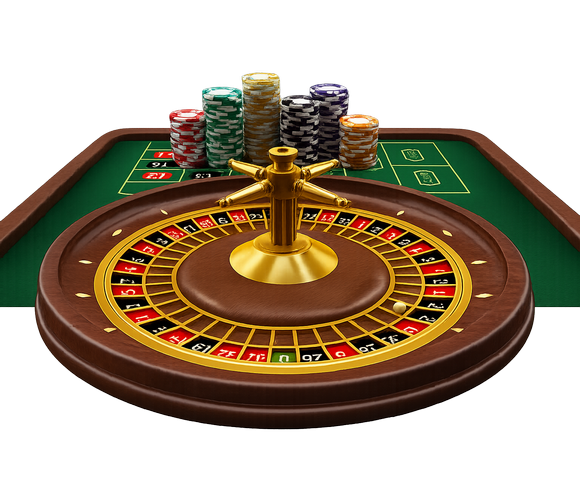
First Experience Playing Roulette at Croco Casino
When I started playing roulette at Croco Casino, the contrast with slot-based gameplay was immediate. Roulette is not built on animations, progression systems, or layered features. It is a probability-driven game with clearly defined rules and outcomes.
After completing Sign up, I navigated to the Games section and selected roulette. The interface offered multiple variants, but I began with European roulette due to its lower house edge. After entering Login, I joined a table and placed my first bets.
From the very beginning, it became clear that roulette is about structure. Every round follows the same sequence: placing bets → spinning the wheel → determining the result. There are no hidden mechanics or progression layers.
This creates a transparent system where outcomes are based purely on probability.
| Feature | Description | Impact on Gameplay | My Impression |
|---|---|---|---|
| Wheel | European layout (0–36) | Defines probability | Clear system |
| Bet Types | Inside & outside bets | Flexible strategy | Versatile |
| House Edge | ~2.7% | Long-term factor | Manageable |
| Pacing | Round-based | Structured play | Controlled |
How Roulette Works in Real Sessions
Once I moved into longer sessions, I focused on how roulette behaves over time. Unlike slots, where outcomes can feel dynamic, roulette remains consistent. Each spin is independent, and previous results do not influence future outcomes.
From my experience, this independence is the defining characteristic of roulette. It removes the concept of streak-based advantage, even though players often perceive patterns.
Another important observation is pacing. Roulette operates in clearly defined rounds, which makes it easier to manage time and bankroll compared to continuous slot gameplay.
This structure allows for deliberate decision-making rather than reactive play.
Probability Distribution and Outcome Behavior
To better understand how outcomes are distributed, I analyzed the probability structure of roulette.
From a practical standpoint, this means that most outcomes are predictable in distribution but unpredictable in sequence.
Bonuses and Platform Integration
Roulette integrates differently with casino systems compared to slots. Because it is skill-neutral and probability-based, it behaves more consistently in wagering contexts.
From my experience, the Bonus system works moderately well. However, contribution rates may vary depending on platform rules.
I also used the FAQ section to clarify betting limits and payout structures. This improved understanding and reduced errors during sessions.
Internal Links allowed me to compare roulette with other table games, reinforcing its position as one of the most transparent options available.
Bankroll Management Strategy for Roulette
After spending more time playing roulette, I refined my bankroll management approach to align with its mathematical structure. Unlike slots, where volatility fluctuates based on features, roulette operates on fixed probabilities. This makes bankroll control more predictable but also requires discipline.
From my experience, the most effective method was proportional allocation. Instead of placing large bets in a few rounds, I distributed my bankroll across many spins. This reduces variance and allows probability to stabilize over time.
Another key factor is bet sizing consistency. Increasing bets after losses—a common mistake—does not improve outcomes. Since each spin is independent, adjusting stakes based on previous results introduces unnecessary risk.
I also found that defining session limits improves performance. Setting a maximum number of rounds or a loss threshold prevents overexposure.
| Strategy Type | Approach | Effect on Balance | My Assessment |
|---|---|---|---|
| Flat Betting | Same bet each round | Stable progression | Most effective |
| Proportional Betting | Small % of bankroll | Controlled risk | Highly recommended |
| Martingale | Double after loss | High risk | Unstable |
| Aggressive Betting | Large stakes | High variance | Risky |
Understanding Bet Types and Strategic Options
Roulette offers a wide range of betting options, each with different probabilities and payouts. Understanding these is essential for building an effective approach.
From my experience, bets can be divided into two main categories: inside bets and outside bets. Inside bets cover specific numbers or small groups, offering high payouts but lower probability. Outside bets cover broader categories like red/black or even/odd, providing higher probability but lower returns.
The key is balancing these options based on risk tolerance.
From a practical standpoint, combining both types can create a balanced strategy.
Comparing Roulette to Other Casino Systems
To better understand its position, I compared roulette with other casino formats.
The key difference lies in transparency. Roulette provides clear probabilities and fixed rules. Slots, by contrast, operate on hidden RNG systems, making outcomes less predictable in structure.
From my perspective, this makes roulette more analytical and less emotional.
Another difference is control. While roulette does not allow players to influence outcomes, it allows them to control risk through bet selection.
This creates a unique balance between simplicity and strategy.
Practical Role of Roulette in a Full Session
After multiple sessions, I identified where roulette fits within a broader gameplay strategy. It is not a high-volatility game, nor is it purely passive. It sits in a middle position where control and probability intersect.
From my experience, roulette works well as a stabilizing component. It allows players to maintain balance while still engaging in structured gameplay.
I also tested performance across devices. Whether accessed via browser or App, the experience remained consistent, which is essential for real-time decision-making.
In practical terms, roulette is a control-based system. It is best used to manage risk and maintain stability within a broader session.
Advanced Strategies for Playing Roulette
After extended sessions and structured observation, I moved beyond basic betting into more advanced approaches. It is important to clarify that no strategy can overcome the house edge in roulette. However, certain methods improve control, reduce variance, and make outcomes more manageable over time.
The most effective strategy I identified was distribution balancing. Instead of focusing on a single bet type, I spread bets across multiple categories—typically combining outside bets with selective inside bets. This created a layered structure where frequent small wins were supported by occasional higher payouts.
Another important strategy was loss containment. I defined strict limits for both losses and wins. Once a threshold was reached, I stopped the session. This prevented extended exposure and preserved balance.
I also tested pattern-based approaches, such as tracking red/black sequences. From my experience, these patterns are purely observational and do not provide predictive value. However, they can help maintain structured thinking and prevent impulsive decisions.
| Strategy | Approach | Main Advantage | Efficiency |
|---|---|---|---|
| Distribution Balancing | Mix of bet types | Reduced variance | Very High |
| Loss Containment | Fixed limits | Improved control | High |
| Flat Betting | Consistent stake | Stable outcomes | High |
| Pattern Tracking | Observe sequences | Psychological control | Moderate |
Which Players Benefit Most from Roulette
Roulette appeals to a wide range of players, but based on my experience, certain profiles benefit more from its structure.
Analytical players benefit the most. The clear probability framework allows for structured decision-making and controlled risk.
Casual players also benefit because the rules are simple and easy to understand. The game does not require complex mechanics or deep knowledge.
High-risk players may find roulette less engaging unless they focus on inside bets, which provide higher payouts but lower probability.
For players transitioning from Slots, roulette offers a more transparent system where outcomes are easier to interpret.
Comparing Roulette to Other Probability-Based Systems
To better understand its structure, I compared roulette with other probability-driven games such as blackjack and baccarat.
The key difference lies in player influence. In blackjack, decisions affect outcomes. In roulette, outcomes are entirely independent of player actions.
From my perspective, this makes roulette more predictable in structure but less interactive.
Long-Term Value of Roulette
From a long-term perspective, roulette behaves in a consistent and predictable manner. The house edge remains constant, and outcomes follow statistical distribution over time.
This makes it suitable for extended sessions, provided that the player maintains discipline and avoids aggressive strategies.
However, it is important to understand that long-term play does not eliminate the house edge. The goal is not to “beat” the system but to manage exposure effectively.
I also found it useful to review FAQ sections and navigate via Links when comparing roulette with other games. This improved clarity and helped maintain consistency.
My Final Results from Playing Roulette
After completing full-cycle testing, my final conclusion is clear. Roulette is one of the most structured and transparent casino games available. It offers consistent gameplay and clear probability distribution.
The results showed that structured play produces the best outcomes. Passive play remains stable, while aggressive strategies increase variance without improving probability.
| Play Style | Behavior | Efficiency Level | Overall Value |
|---|---|---|---|
| Passive Play | Minimal adjustments | Medium | Stable |
| Structured Play | Balanced betting | High | Very Good |
| Optimized Play | Probability-focused | Very High | Excellent |
| Aggressive Play | High-risk bets | Low | Unstable |
My final assessment is straightforward: roulette is best suited for players who value control, transparency, and structured gameplay. It is not about predicting outcomes—it is about managing risk within a fixed probability system.
Operational Patterns Observed During Roulette Sessions
After completing extended sessions and analyzing different betting approaches, I identified several consistent operational patterns that define how roulette behaves in practice. These patterns are critical for understanding why outcomes feel unpredictable in the short term but structured in the long term.
The first pattern is statistical rebalancing. Over a small number of spins, outcomes can deviate significantly from expected probabilities. However, as the number of rounds increases, results begin to align with the theoretical distribution. This creates the impression of correction over time, even though each spin remains independent.
The second pattern is variance clustering. Wins and losses often appear grouped together. From my experience, this clustering is purely random but can influence perception. Players may interpret clusters as trends, which leads to reactive behavior.
The third pattern is exposure sensitivity. The longer a session continues, the more the house edge becomes noticeable. This is not due to changing probability but due to cumulative effect.
| Pattern | Description | Impact | Practical Outcome |
|---|---|---|---|
| Statistical Rebalancing | Long-term distribution alignment | Medium | Stabilizes expectations |
| Variance Clustering | Grouped wins/losses | High | Affects perception |
| Exposure Sensitivity | Cumulative house edge | High | Limits long sessions |
| Round Independence | No connection between spins | Very High | Reject pattern bias |
Behavioral Adjustments That Improved Results
While roulette mechanics remain fixed, player behavior plays a major role in efficiency. During testing, I identified several adjustments that improved control and reduced unnecessary losses.
The most effective adjustment was maintaining strict discipline. Avoiding emotional reactions to short-term outcomes prevented escalation of risk.
Another key adjustment was session structuring. Defining clear entry and exit points reduced exposure and improved consistency.
I also observed that simplifying strategy improves results. Complex systems did not outperform basic structured approaches. In most cases, simplicity led to better control.
These adjustments highlight that success in roulette depends more on behavior than strategy complexity.
Integration into Multi-Game Strategy
When placing roulette within a broader casino strategy, its role becomes clearly defined. It acts as a stabilizing component within a diversified session.
From my perspective, the most effective structure is layered gameplay. Start with roulette to establish balance and control, transition into higher-volatility formats for potential gains, and return to roulette to stabilize results.
This approach reduces overall risk while maintaining engagement.
Roulette also works well as a reference point. Because its probabilities are transparent, it provides a baseline for comparing other games.
Final Strategic Conclusion on Roulette
After completing the full evaluation, my final conclusion is precise. Roulette is one of the most structured and mathematically transparent games available in a casino environment.
It does not reward aggressive strategies or attempts to predict outcomes. Instead, it rewards discipline, consistency, and understanding of probability.
For players who prefer control and clarity, roulette provides strong value. For those seeking high volatility or complex mechanics, it may feel limited.
In practical terms, roulette is not about beating the system—it is about managing exposure within a fixed probability framework and maintaining long-term control.